From June 22 to 26, the 2026 International Supercomputing Conference (ISC High Performance 2026) was successfully held in Germany. During the event, the Global Computing Consortium (GCC) made a high-profile appearance, organizing a series of activities — including a dedicated technical talk, an industry roundtable, and in-depth on-site exchanges at the exhibition booth — around the new generation of low-bit-width AI data format, HiFloat. The activities comprehensively showcased the latest technical progress and mature ecosystem developments of HiFloat for AI training and inference scenarios to the European HPC and AI industry and academic communities.
As a leading authoritative platform for high-performance computing, AI, and quantum computing in Europe, ISC High Performance 2026 gathered top experts from across the global industry, with a focus on cutting-edge technology trends. At this conference, HiFloat made its first systematic appearance at a major European international event, immediately drawing wide attention from technical experts, research institutions, universities, and industry players from China and abroad. Participants engaged in in-depth discussions on the development direction of low-bit-width floating-point formats, the challenges of implementing large-model training and inference, and the joint construction of an open ecosystem.
Technical Talk: HiFloat8 Unlocks AI Compute Efficiency with an Innovative Data Format
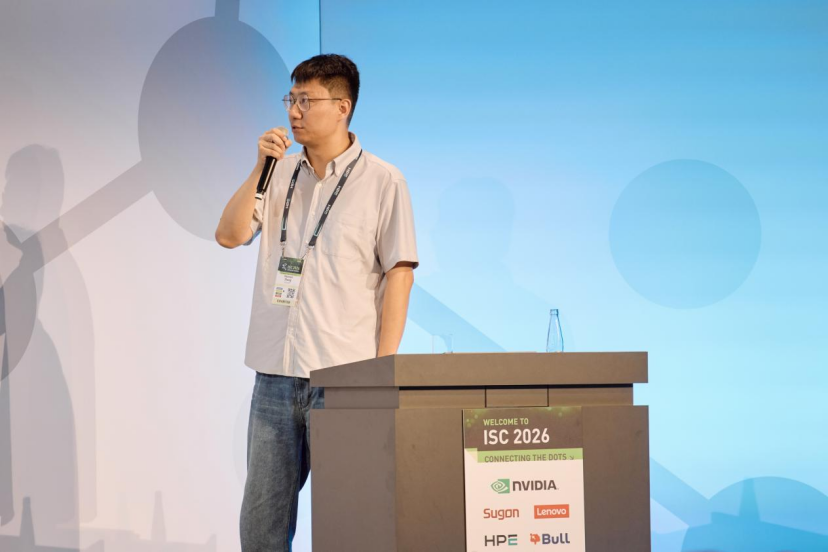
In the dedicated technical talk, Zhang Haonan, Code SIG Maintainer of the GCC-HiFloat Community, systematically introduced chip support, encoding rules, and large-model training and inference validation results for the HiFloat8 data format. As the parameter scale of large models continues to grow, AI computing is facing multiple bottlenecks in memory, bandwidth, communication, and energy consumption, and low-bit-width data formats are emerging as a key technology path for improving AI infrastructure efficiency.
The core innovation of HiFloat8 lies in redesigning the 8-bit floating-point representation around the data distribution of AI. Unlike traditional formats with fixed exponent and mantissa bit splits, HiFloat8 introduces a dynamic dot-position field, enabling flexible encoding of the exponent field width and the denormal mode. This allows a single data format to cover multiple levels of numerical distribution, producing a cone-shaped precision distribution that better matches the real characteristics of neural network activations, gradients, and other values across different numerical ranges. In addition, HiFloat8 reduces redundancy and range overlap through more compact exponent encoding, devoting limited bits as much as possible to effective value representation. While reducing data bit width, it maintains training convergence efficiency and model accuracy close to those of 16-bit formats, providing a new technical option for cost-effective large-model training and inference.
Roundtable: From Technology Trends and Format Evolution to Real-World Validation
The roundtable was held on the theme "Low-Bit Floating-Point for AI Training and Inference: Unleashing the Full Potential of Every Bit." Multiple panelists shared their views from the perspectives of academic research, standards evolution, industry ecosystems, and real-world application validation, and engaged in in-depth discussion with the audience.
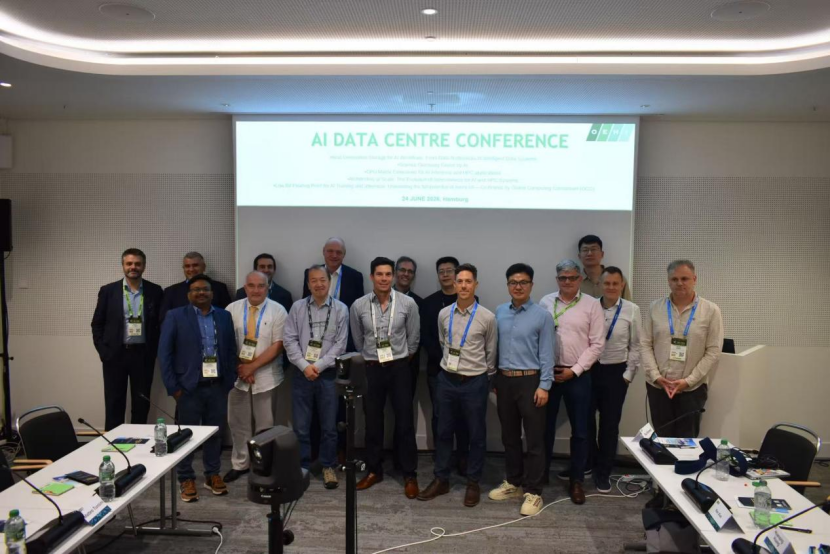
Prof. Torsten Hoefler, Member of the GCC Strategic Advisory Committee (SAC) and Member of Academia Europaea,addressed the research directions and industry trends in low-bit-width data formats, noting that low-bit floating-point formats have already become an important direction for the future of AI computing. As training and inference scales continue to expand, the industry not only needs lower storage and transmission costs, but also requires numerical stability in real-world models. Compared with simply pursuing a larger dynamic range, future data format designs should place greater emphasis on effective numerical precision and on its alignment with AI data distributions, model convergence, and application outcomes.
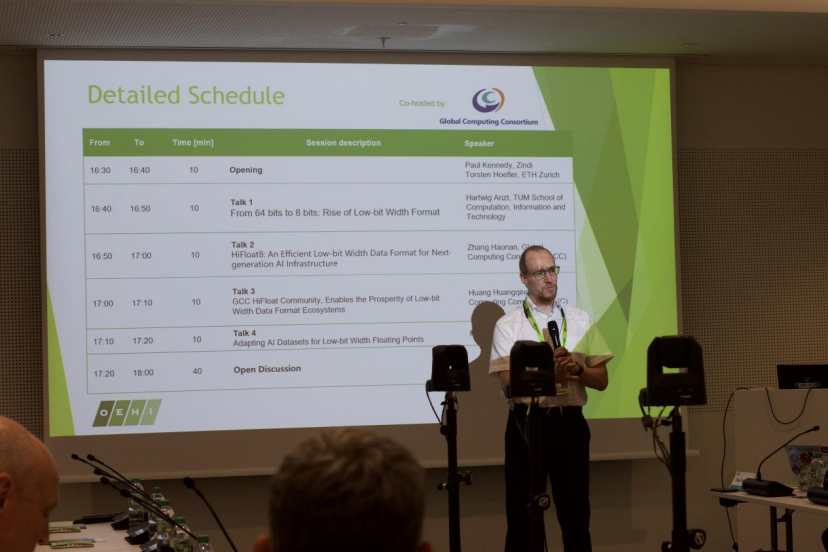
Prof. Hartwig Anzt, of the School of Computation, Information and Technology at the Technical University of Munich (TUM) and the Innovative Computing Laboratory at the University of Tennessee,provided a neutral overview of low-bit-width data formats. He systematically reviewed major low-precision format technologies worldwide, emphasizing that different formats essentially make trade-offs among dynamic range, numerical precision, hardware efficiency, and energy consumption. The development of low-bit-width formats is moving from isolated technical exploration toward broader industry consensus and standardization.
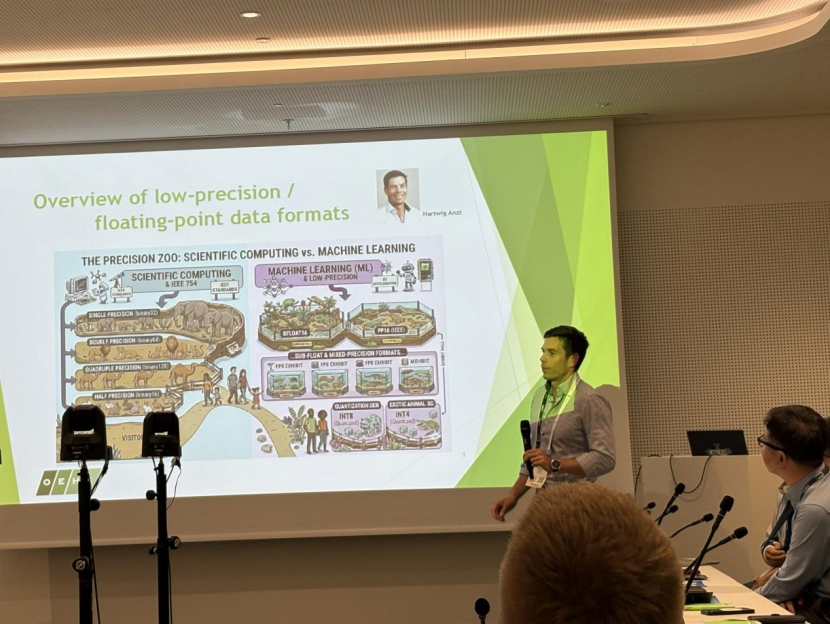
Huang Huanqing, Deputy Secretary-General of the GCC Intelligent Computing Industry Development Group,introduced the ecosystem progress of the GCC-HiFloat Community. He noted that low-bit-width data formats have become an important component of foundational AI computing technologies, and that GCC will continue to advance work around HiFloat standards, the developer ecosystem, academic ecosystem, testing and validation, and industry adoption. The HiFloat8 technical specification has been released, and the HiFloat4 standard project will also continue to move forward. Meanwhile, the HiFloat Community will use initiatives such as the Large-Model Co-Creation Program and the Low-Bit-Width Large-Model Quantization Challenge to engage chip vendors, model developers, cloud service providers, research institutions, and developers in building an open and collaborative industry ecosystem.
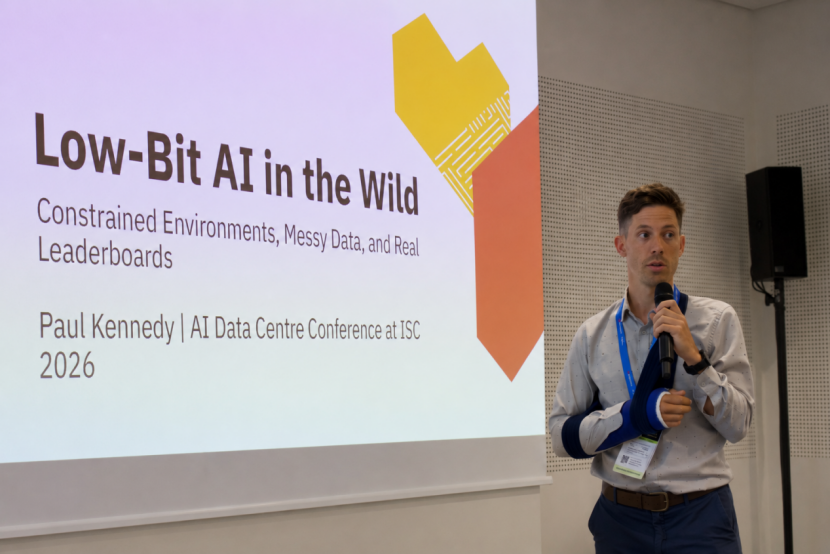
Paul Kennedy, Chief Strategy Officer of the AI community platform Zindi,argued from the perspective of real-world AI applications and community evaluation that low-bit intelligent computing should not be validated only under idealized conditions, but tested in complex real-world scenarios. Data in domains such as agriculture, health, finance, climate, and language often suffer from noisy labels, class imbalance, small sample sizes, high-stakes evaluation, and distribution drift, and models are frequently required to run on edge devices. The value of low-bit-width formats lies not only in reducing cost and improving speed, but also in their ability to maintain reliability and reproducibility on real-world data and in real deployment environments.
In the open discussion that followed, on-site guests and attendees discussed the applicable scenarios of HiFloat, its differences from formats such as BF16, FP8, and MXFP, precision stability in training and inference, chip support, toolchain adaptation, real-world application evaluation, and industry collaboration paths. There was broad consensus that low-bit-width data formats have evolved from "a technical option for improving efficiency" to "a key element in the evolution of AI infrastructure." As a new low-bit-width floating-point format optimized for AI scenarios, HiFloat offers the European HPC and AI communities a new direction for both research and industry collaboration.
Booth Exchange: HiFloat Attracts Wide Attention
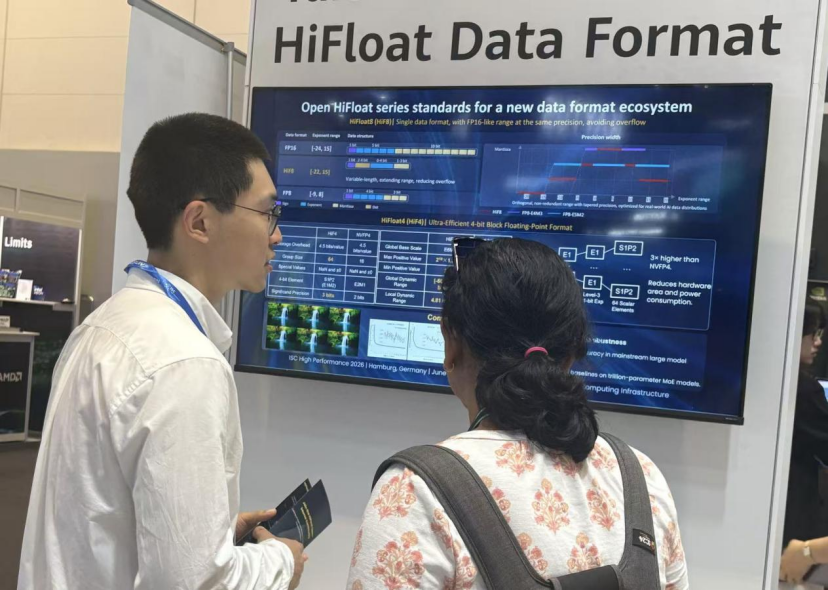
In addition to the technical talk and the roundtable, HiFloat was also showcased to attendees through an exhibition booth. The booth highlighted HiFloat's technical features, application directions, community resources, and future collaboration opportunities, attracting visits and exchanges from multiple companies across chips, systems, software, cloud computing, and AI applications. On-site representatives engaged in discussions about the potential value of HiFloat in large-model training, inference deployment, hardware support, and ecosystem co-construction, reflecting strong industry interest in low-bit-width AI data formats.
This event marked an important first appearance for HiFloat in the European market and the international HPC community. Going forward, GCC will continue to advance open collaboration, standards development, technology validation, and industry adoption for the HiFloat family of data formats, working with universities, research institutions, chip vendors, AI infrastructure providers, and model and application partners worldwide to explore a new path for high-efficiency AI computing in the era of large models.

 High Performance Computing Development Group(HPC DG)