On June 13, the "Smart Stone City · Innovation Together" Showcase Conference on Power Intelligent Inspection Achievements Based on Domestic AI Computing Architecture was successfully held in Shihezi, Xinjiang. The event marked the launch of the first power-industry operator library pilot built on Ascend CANN, jointly developed by the Intelligent Computing Industry Development Group (ICIDG) of the Global Computing Consortium (GCC) and its member, Hangzhou Tianking Technology Co., Ltd. Centered on this pilot, the GCC ICIDG shared joint industry practices and a co-construction plan covering the domestic computing ecosystem, the implementation of intelligent computing in industry, and the joint development of industry operator libraries.
As digitalization, intelligence, and domestic-substitution accelerate in the power industry, deeply integrating domestic AI computing power, industry-specific algorithms, intelligent hardware, and real-world scenarios has become a key direction for industry development. This event focused on the application practice of domestic AI computing architecture in power intelligent inspection, bringing together leading institutions from industry and academia for in-depth exchange. GCC was invited to share its work in intelligent computing and embodied intelligence.
Gao Pan, Deputy Party Secretary and Dean of the College of Information Science and Technology of Shihezi University, delivered a keynote titled "Industry-Education Integration Cultivates Talent; AI Empowers the Future." Drawing on this power intelligent inspection solution, Dean Gao discussed the significance of combining domestic AI computing architecture with power inspection scenarios for university teaching practice, students' engineering capabilities, and the intelligent transformation of the power industry, from the perspectives of industry-education integration, student practice, talent cultivation, and alignment with industry needs.
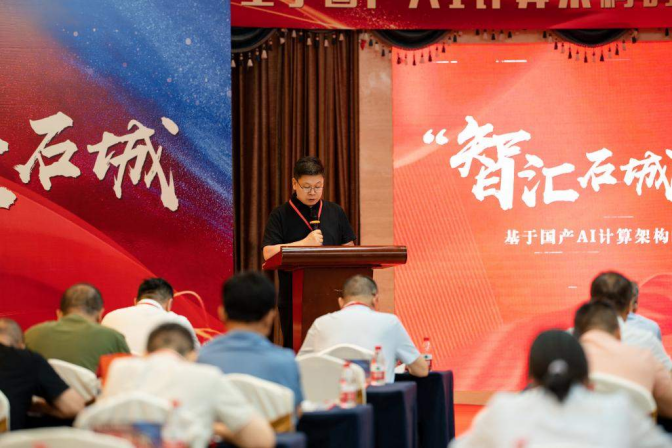
Gao Pan, Deputy Party Secretary and Dean, College of Information Science and Technology, Shihezi University
GCC delivered a presentation titled "Co-building a New Domestic Computing Ecosystem and Driving Intelligent Computing into Industry Applications," highlighting the work of the ICIDG on intelligent computing innovation, industry ecosystem prosperity, and industry deployment. Linking the topic to this power intelligent inspection achievement, GCC shared the joint exploration with Tianking Technology in using a CANN-based power-industry operator library as a pilot to advance industry operator library construction, CANN secondary ecosystem co-construction, and the scenario-based promotion of domestic intelligent computing, as well as GCC's industry observations and ecosystem layout in embodied intelligence.
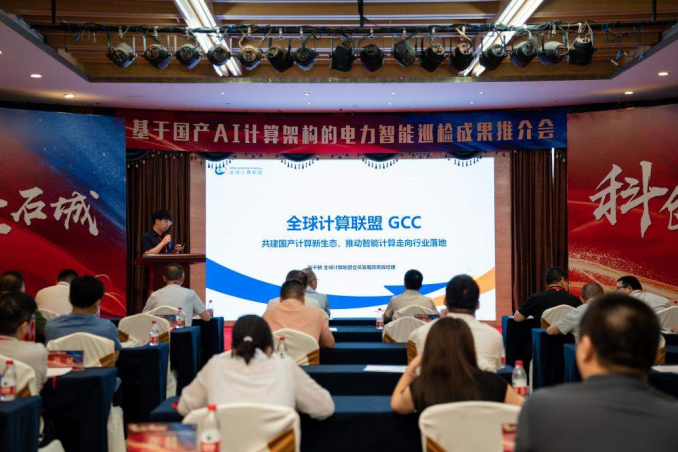
Zhang Qianlin, Senior Manager of Member Development, Global Computing Consortium
The power-industry operator library pilot represents an important practice in which the GCC ICIDG combines industry applications with the domestic computing-power ecosystem. Built on the CANN-based operator library used in Tianking Technology's power intelligent inspection solution, the pilot is oriented toward real business needs such as AI inspection of power facilities, defect identification, and scenario adaptation, and aims to develop demonstrable, scalable, and replicable industry application cases. Through this pilot, GCC will further connect industry users, ecosystem partners, university research teams, and developer resources to advance the construction of power-industry-specific operator libraries, scenario-based solutions, and developer contribution mechanisms, exploring a replicable industry path for the CANN secondary ecosystem.
Chen Jiahong, Distinguished Researcher of the China Electricity Council (CEC), reported the appraisal results of the "Power Intelligent Inspection Achievements Based on Domestic AI Computing Architecture." At the closed-door appraisal meeting held that morning, the expert panel agreed that the achievement met the application objectives of the declared product and that the overall level is leading in China. The panel also provided professional opinions on subsequent scenario optimization, refinement of technical features, and large-scale promotion.
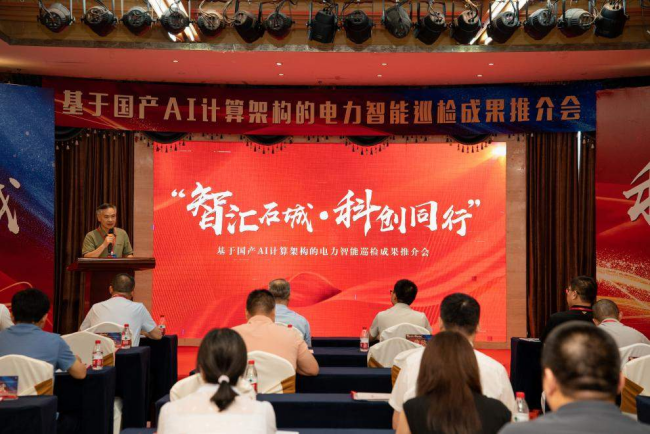
Chen Jiahong, Distinguished Researcher, China Electricity Council
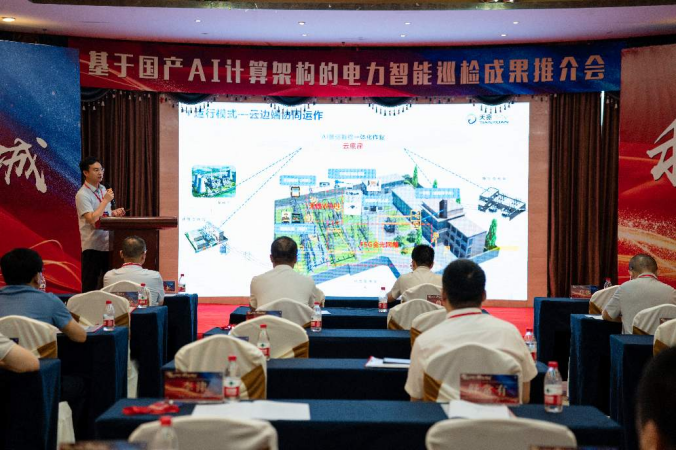
As the host of the event, Wen Zhengke, Product Director of Hangzhou Tianking Technology Co., Ltd. (a GCC Gold Member), delivered a dedicated talk on the actual pain points of power industry inspection and the application path of domestic solutions. Drawing on this power inspection project, he detailed Tianking Technology's practice and roadmap in fused AI and embodied intelligence applications, with a focus on the CANN-based power-industry operator library, model deployment and tuning, and scenario adaptation capabilities, demonstrating Tianking's technical accumulation and engineering capability in domestic AI power inspection solutions.
Wen Zhengke, Product Director, Hangzhou Tianking Technology Co., Ltd.
Zhu Jianxing, Head of Solutions for the Xinjiang Region at Hangzhou DEEP Robotics Co., Ltd., gave a technical introduction to the inspection robot dog hardware used in the solution, presenting application cases of DEEP Robotics' quadruped robots in power inspection and other industry scenarios. As a representative company in the quadruped robotics field, DEEP Robotics introduced the corresponding robot models, product features, and scenario adaptation capabilities for different inspection environments and tasks, demonstrating the value of intelligent embodiments in complex power inspection scenarios.
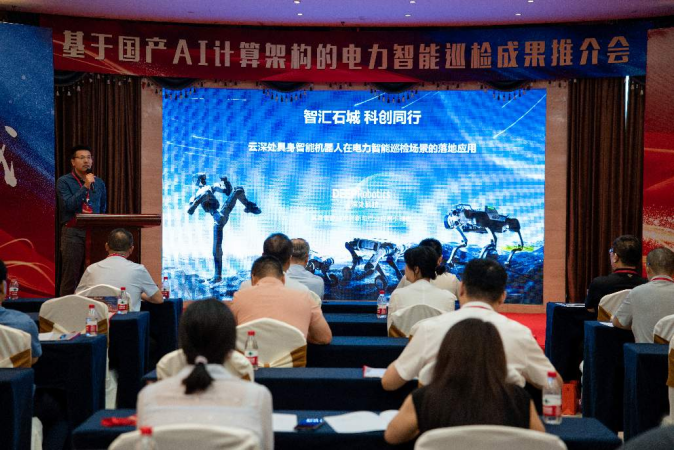
Zhu Jianxing, Head of Solutions for Xinjiang Region, Hangzhou DEEP Robotics Co., Ltd.
Going forward, the GCC ICIDG will use the power-industry operator library pilot as a starting point to continuously advance an ecosystem co-construction mechanism of "industry workshops — joint competitions — certification and training — achievement promotion":
• From July: Launch industry pilot workshops to align industry needs and best practices with power enterprises, solution partners, university research teams, and ecosystem members around real demands such as AI power inspection, defect identification, and scenario adaptation. In parallel, prepare for the Ascend Innovation Contest, covering general operator development, industry operator development, and industry solutions, with work on contest design, organizer invitations, team organization, and result-transformation mechanisms.
• In August: Launch the offline Ascend C examination and certification program, and combine it with Ascend skills training and the GCC Developer Elite Program to gradually build a developer cultivation system for the domestic computing-power ecosystem.
Through these efforts, the GCC ICIDG will help develop more industry-specific operator libraries, industry solutions, and outstanding developer achievements, accelerating the deployment of domestic intelligent computing technologies in the power industry and beyond.
About the GCC Intelligent Computing Industry Development Group
The GCC Intelligent Computing Industry Development Group aims to build the most influential intelligent-computing industry development platform in China with international impact, address key pain points in the development of the intelligent computing industry, and promote healthy and sustainable global development. It currently has 100+ member entities, covering the entire ecosystem and value chain — chips and components, complete machines and computing infrastructure, software and ISVs, models and applications, industry users, and academia and think tanks.
For more information or to participate in the GCC ICIDG, please contact:
Ms. Zhang zhangqianlin@gccorg.com

 High Performance Computing Development Group(HPC DG)